
Gamigaya and Goygol Historical, Cultural, and Natural Complex
The Gamigaya monuments are jewels of Azerbaijan’s cultural history. Such monuments are a rare treasure for studying many aspects of the Azerbaijani people’s culture.
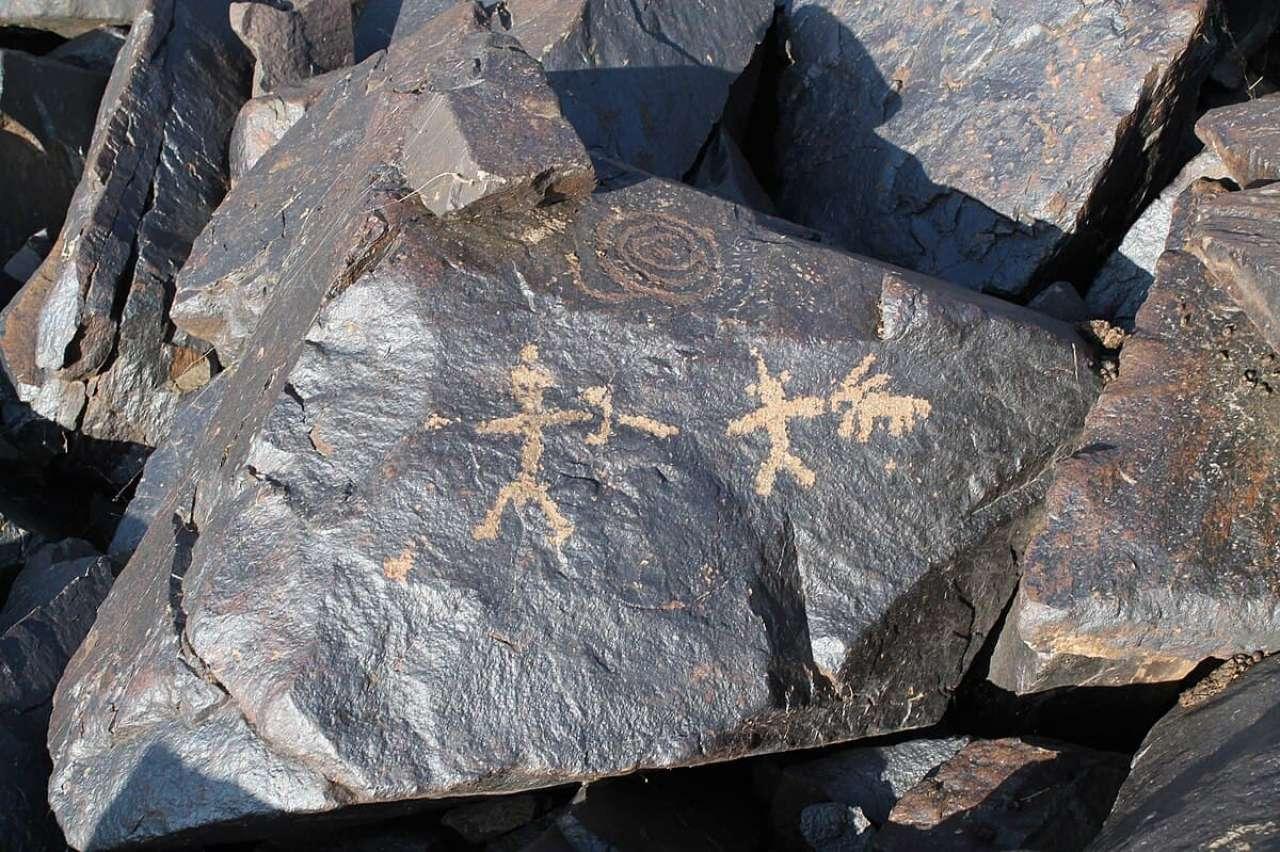 Nakhchivan, a land of ancient monuments, holds legends about each of its mountains that have lived on in the memory of generations and reflect the earliest stages of human history. Gamigaya, regarded as one of the most sacred places of the ancient world, is located in the Ordubad district, northeast of the villages of Tivi and Nasirvas, on Gapijig — the highest peak of the Lesser Caucasus.
The Gamigaya depictions — rock engravings dating to the 3rd–1st millennia BC — are located on Mount Gamigaya, north of the city of Ordubad in the Nakhchivan Autonomous Republic. Discovered in 1968, they were studied beginning in 1970, revealing images of humans and various animals, scenes of dance, goat hunting with bow and arrow, and different symbols. The engravings appear individually, in pairs, and in composed scenes.
The Gamigaya engravings are small and rendered schematically. Similar depictions can be found in Kalbajar and especially in Gobustan. It is believed that the images belonged to ancient pastoral tribes who lived in the plains and foothill areas on the left bank of the Araz River and used the Gamigaya area as summer pastureland. They are among the oldest monuments of visual art in Azerbaijan and belong to the Nakhchivan cultural tradition.
Gamigaya was a sacred place of worship for our ancestors for many centuries. On its summit, there were two natural lakes associated with ancient Turkic peoples: Goygol and Gazangol. Goygol is situated 3,065 meters above sea level, while Gazangol lies at 3,150 meters. Goygol is located on the southern slope of the Zangezur range. It covers an area of 1.5 hectares and reaches a depth of up to 6.5 meters. The lake, located near the village of Nurgut, is fed by snow and rainfall throughout the year, as well as springs that boil up from its center. Of volcanic origin, the lake lies at an elevation of approximately 3,000–3,500 meters at the foot of the mountain. It is considered the highest mountain lake of the Lesser Caucasus. The mirror-like surface of Goygol measures 211 meters in length, 103 meters in width, and reaches a maximum depth of 7 meters.
The settlements, summer pastures, rivers, springs, and hills surrounding Gamigaya on all four sides are associated with the names of ancient Turkic lineages. More than 100 recorded toponyms belong to the territory of Nakhchivan, and nearly 70 to the Zangezur region. According to researchers, Armenians have never been the indigenous population of the South Caucasus. The Gamigaya monuments, which contain rock engravings characteristic of ancient Turkic culture, are a vast treasure for studying the history and spiritual culture of the Azerbaijani people. The Gamigaya monument is a work of art created by our ancestors. The Gamigaya rock engravings are located on the Garangush summer pasture at an altitude of 3,000–3,500 meters. Beyond this, similar depictions can be found across a wide area stretching from the summit of Gapichay to the Gamisholan and Nabiyurdu summer pastures. Among the engravings are images of humans, deer, goats, oxen, snakes, birds, carts, dogs, lions, fantastic creatures, and hunting scenes — all of which are connected to the ancient mythology of the Azerbaijani Turks.
The Gamigaya petroglyphs are among the oldest examples of Azerbaijani culture. These depictions were carved onto rocks located in the Ordubad district, east of the village of Nasirvaz, at an altitude of 3,500–3,700 meters above sea level, on the slopes of Mount Gapijig in the foothills of the Lesser Caucasus. They are found around the traditional pasture sites of Nabi yurdu, Garangush, Giz-gelin chukuru, Gollar, and other surrounding areas.
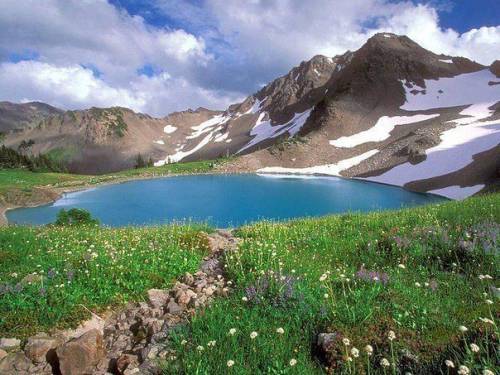 The chronology of the Gamigaya depictions has been determined solely through comparative analysis and the study of their engraving techniques. The Gamigaya images emerged in connection with the development of nomadic pastoralism. Research allows us to state that nomadic animal husbandry in Nakhchivan appeared in the second half of the 7th millennium BC, approximately 10,000 years ago. Comparative analysis of the Gamigaya engravings with the depictions on ceramic artifacts indicates that the earliest drawings date to the Neolithic and Eneolithic periods. However, Gamigaya also contains images belonging to various stages of the Bronze Age, as well as the Iron Age and the Middle Ages.
Research on the Gamigaya monuments began in the 1970s, during the first period of national leader Heydar Aliyev’s political leadership in Azerbaijan. In 1971, the Presidium of the Academy of Sciences of the Republic of Azerbaijan decided to conduct research at Gamigaya, publish a scientific album, and produce a popular-science film. Research work continued at Gamigaya from 1970 to 1987, and a number of scholarly materials were published. The National Leader of the Azerbaijani people, Heydar Aliyev, stated: “...As we know, this is both a great monument of nature and a monument of human creativity. This monument belongs to Azerbaijan. It is a monument that reflects the history of Azerbaijan.”
These monuments are regarded as part of the golden treasury of Azerbaijan’s ancient cultural and artistic heritage. Therefore, the inclusion of the “Gamigaya and Goygol Historical, Cultural, and Natural Complex” in UNESCO’s Tentative List of World Heritage Sites is an important step in promoting the country’s historical and architectural monuments. At the 47th session of UNESCO held in Paris on 11 July 2025, the “Gamigaya and Goygol Historical, Cultural, and Natural Complex,” submitted by Azerbaijan, was inscribed on the Tentative List of World Heritage Sites.
Reference and hyperlink required.