
Ancient City of Gabala
When this land is mentioned, the ancient city of Gabala — the capital of Caucasian Albania for 900 years (from the 4th century BC to the 5th century AD) — and its impressive surviving fortress walls come to mind first. Located 20 km southwest of the district center, at the watershed of the Corlu and Qara rivers, in the northeastern part of today’s Chukhur Gabala village, ancient Gabala is renowned for its grandeur and is compared to the world’s famous ancient cities such as Babylon, Troy, Pompeii, and Carthage for its importance as a major political, economic, and commercial center.
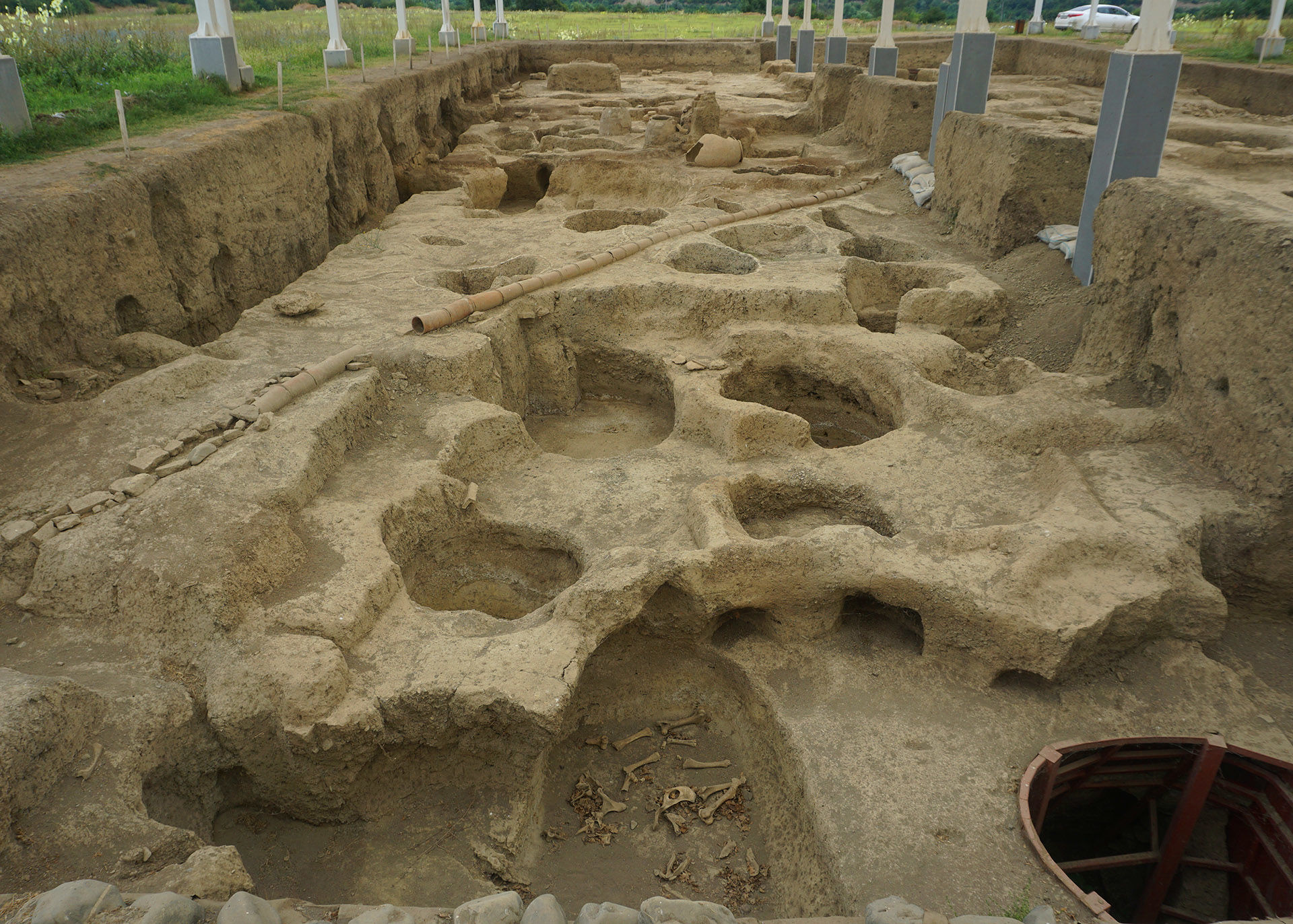 As a result of many years of archaeological excavations carried out here by prominent Azerbaijani archaeologists S. Gaziyev, G. Ahmadov, I. Aliyev, F. Gadirov, and others, the remains of large buildings and fortress walls from the Antiquity period, as well as material-cultural artifacts related to production and craftsmanship, have been uncovered.
The city of Gabala, with a history of 2,400 years and located along the ancient Silk Road, was referred to as “Cabalaca” by the Roman scholar Pliny the Elder (1st century AD) in his work “Natural History”, as “Khabala” by the Greek geographer Claudius Ptolemy (2nd century), and as “Khazar” by the Arab historian Baladhuri (9th century). It was the Azerbaijani scholar A. Bakikhanov who first identified “Kbala” or “Khabala” as Gabala in his 19th-century work “Gulistani - Iram”.
For centuries, the city of Gabala bravely withstood the ruthless attacks of foreign invaders who set their sights on Azerbaijani lands, earning its place in history as an indomitable fortress-city. In the 1st century AD, the Romans recognized Kabalaka (Gabala) as an “oppidum”, meaning a fortified city. Although Albania was conquered by the Sasanians in 262 AD, Gabala did not lose its political or economic significance. In the second half of the 5th century (in 464), during a period when Albania temporarily lost its independence and the raids of northern nomads intensified, the country’s capital was moved from Gabala to Partav (Barda). Even afterwards, Gabala continued to exist as one of the principal centers of trade, craftsmanship, culture, and spiritual life.
Gabala faced invasions and devastation by the armies of Shirvanshah Fariburz in 1068, Georgian King David III in 1120, Tamerlane in 1386, Safavid Shah Tahmasib I in 1538, and Nadir Shah in 1734, yet it never completely lost its significance. After the death of Nadir Shah in 1747, Azerbaijan was divided into khanates, sultanates, and melikdoms, and during this period Gabala existed as an independent sultanate.
By the late 18th century, the Gabala sultanate had become known as the Gabala district. Following the administrative reforms carried out by Tsarist Russia in the Caucasus in 1841, the khanates in Azerbaijan were abolished and replaced with governorates and counties. During this period, the Gabala district was incorporated into the Sheki (Nukha) county of the Yelizavetpol (Ganja) Governorate.
As noted, Gabala’s favorable historical and geographical location led to its territory being inhabited since ancient times, resulting in the emergence of rich material-cultural monuments.
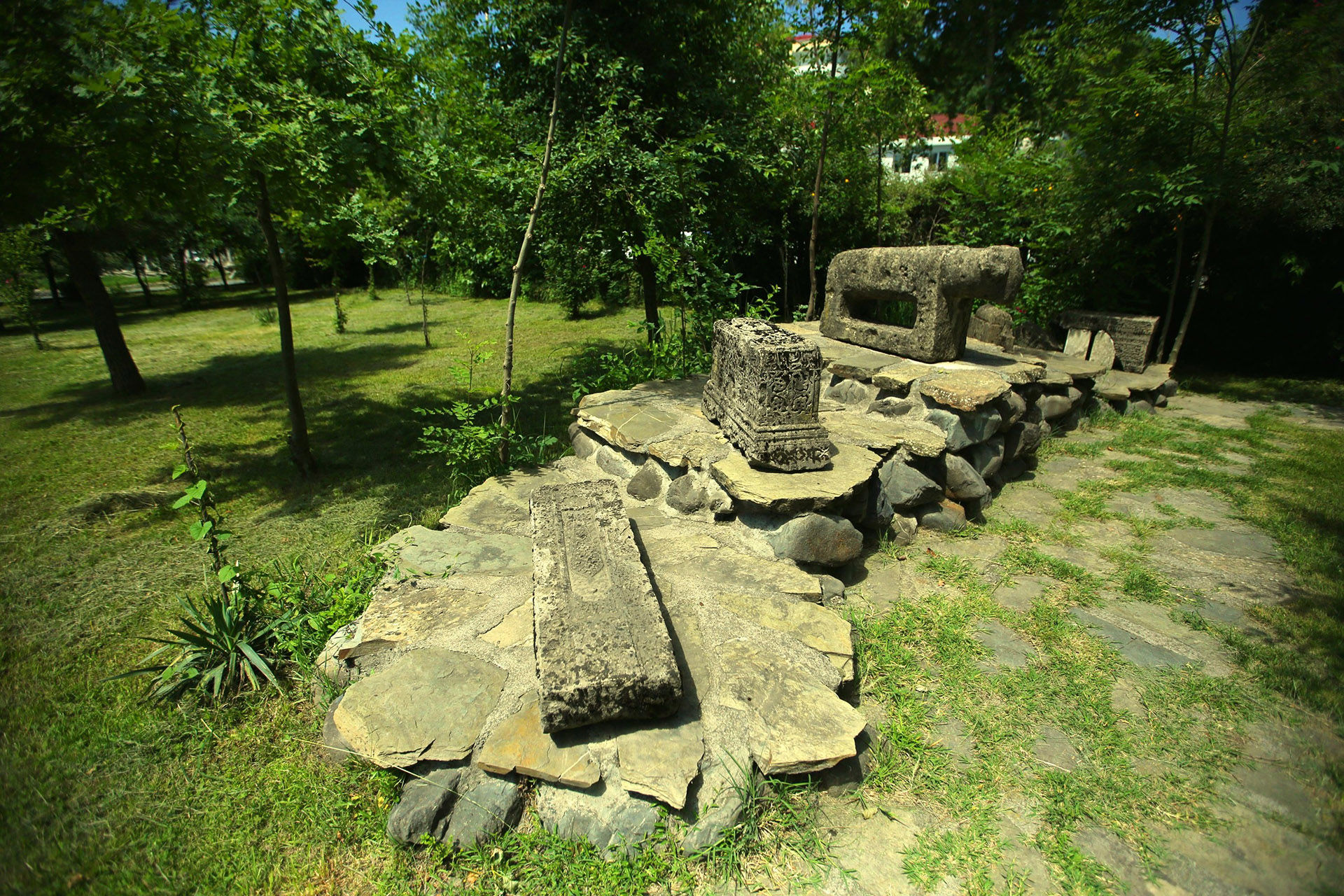 More than 90 historical, ethnographic, and material-cultural monuments have been recorded and protected within the district. To preserve the remains of the ancient city of Gabala and the numerous archaeological discoveries uncovered around it, the Gabala Historical and Cultural Reserve was established here in 1985, covering an area of 480 hectares.
In the village of Boyuk Amili, there is a stone kurgan dating to the 1st millennium BC; in the south of Soltannukha village, on Mount Kilsa, stands an Albanian church (temple) from the 4th century; in the settlement of Nij, a necropolis from the ancient period; in the south of Yengija village, the Gizlar Fortress dating from the 4th–14th centuries; in the river gorge, the Surkhay Fortress of the 10th–12th centuries; in the village of Hazra, a complex of tombs from the 14th–15th centuries; in the northwest of Dizakhli village, the Komurad Mausoleum from the 7th century; the remains of the Budkhana temple complex in the city of Gabala; the eight-sided mosque from the 18th century; the Juma Mosque built in the late 19th–early 20th centuries; the 19th-century House Museum of I. B. Gutgashinli and his tomb monument, along with other historical monuments, constitute the “historical jewels” of the district and inevitably capture the attention of visitors. In recent years, with the aim of studying Gabala’s historical past and its present, as well as preserving and passing this heritage on to future generations, a number of measures have been implemented by the district administration.
From 6 to 16 July 2025, the 47th session of the World Heritage Committee was held at UNESCO Headquarters in Paris, France. In accordance with the session’s agenda, the nomination files submitted for inclusion on the Tentative List of World Heritage were reviewed on 11 July. The “Gamigaya and Goygol Historical, Cultural, and Natural Complex” and the “Ancient City of Gabala,” submitted by Azerbaijan, have been inscribed on UNESCO’s Tentative List of World Heritage.
Reference and hyperlink required.